Late Spring Mason Bee Care
One of the most common questions we get this time of year is: “What should I do with my mason bee house now that spring is ending?”
If you’ve been watching your blue orchard mason bees (Osmia lignaria), chances are they are close to done for the season. In our region, adult mason bees are usually mostly finished flying by around June 1st, although timing can vary a little depending on weather and elevation.
That means it’s time to start thinking about protecting the next generation of bees developing inside your nesting tubes.
A Reminder: The Bees Are Still In There
Even though the adult bees are disappearing from your yard, the next generation is still developing inside the tubes. The larvae are actively growing and transforming into adult bees that will overwinter until next spring.
At this stage, one of the biggest remaining threats to tube-style mason bee houses is something many people never notice: Monodontomerus (mono) wasps.
What Are Mono Wasps?
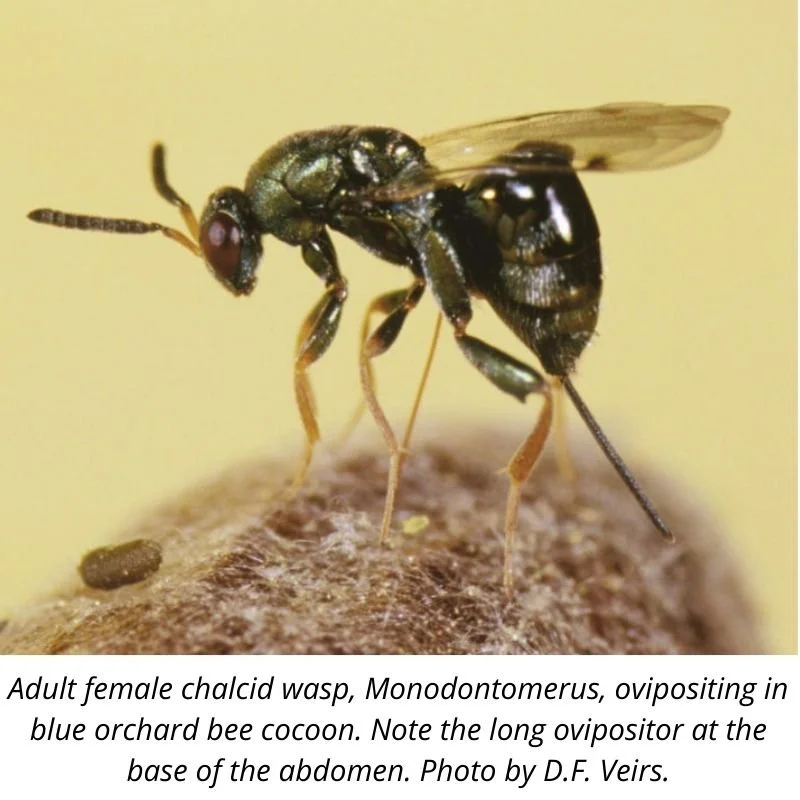
Mono wasps are small parasitic wasps that target cavity-nesting bees like mason bees. They are tiny — often small enough to fit between nesting tubes or through small cracks in bee houses.
These wasps lay their eggs inside mason bee cells by inserting their ovipositor through the cardboard tubes. When the wasp larvae hatch, they consume the developing mason bee.
Unfortunately, we’ve already started seeing evidence of mono wasps emerging this season, which means now is a great time to take preventative action.
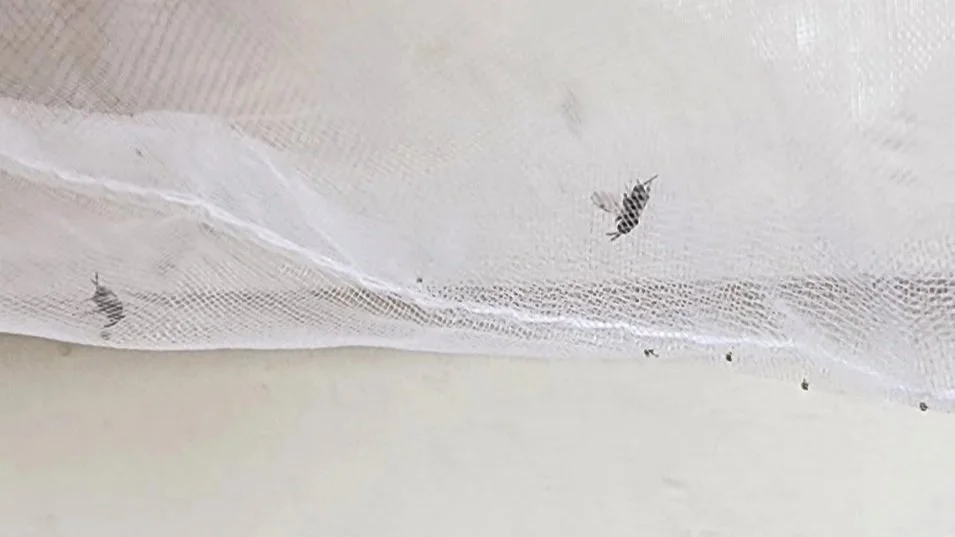
Mono wasps inside a mesh bag.
Why Tube Houses Are Vulnerable
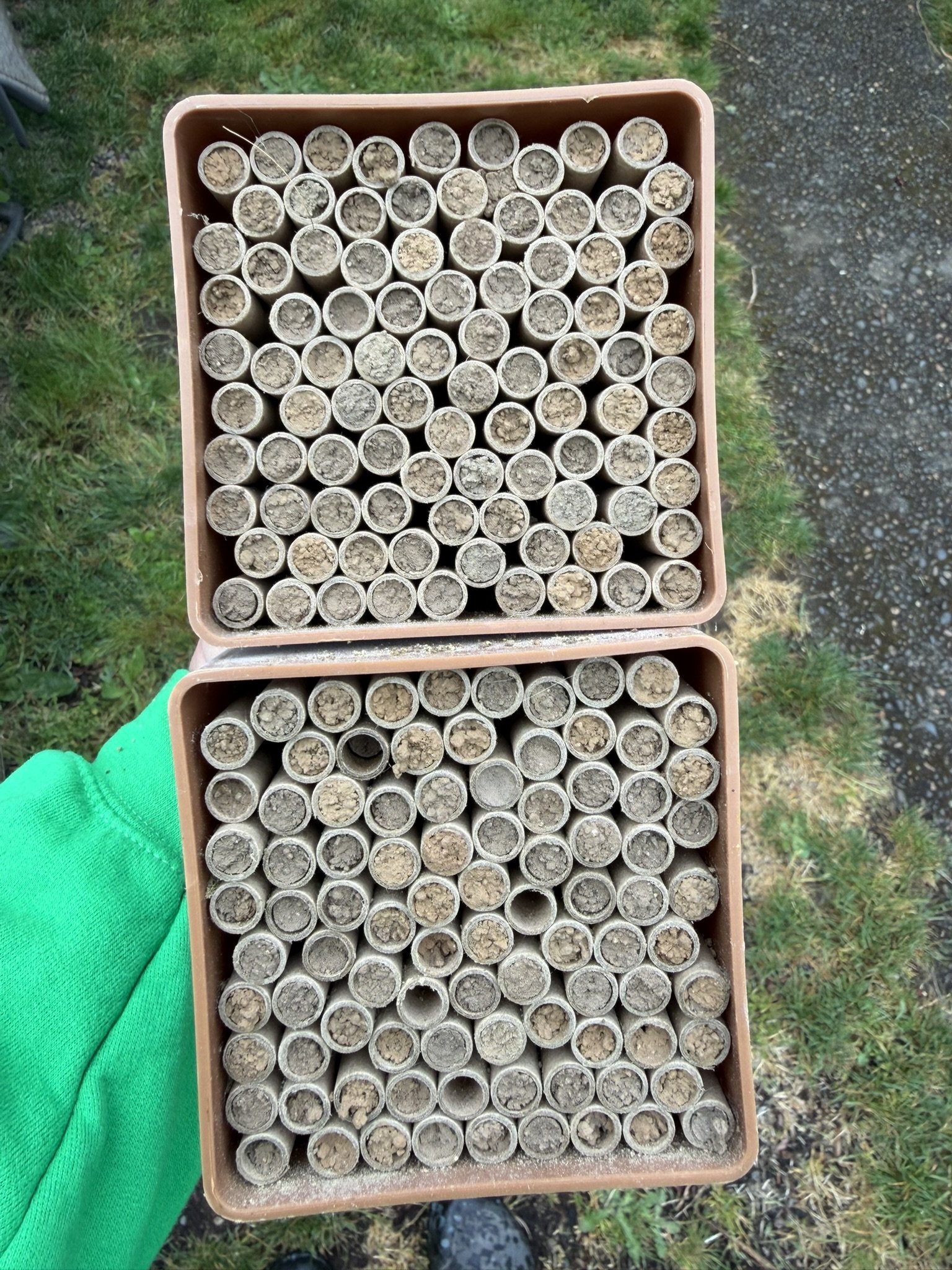
Tube-style mason bee houses are especially susceptible because the small gaps between tubes can allow parasitic wasps access to the developing brood.
Even tightly packed tube systems can provide enough space for these tiny wasps to squeeze through and deposit eggs through the side of the cardboard tubes.
That’s why many mason bee keepers remove their tube houses in late spring and place them into:
mesh bags
paper bags
breathable containers
protected sheds or garages that don’t get too hot
The goal is not to seal the bees up airtight, but to create a barrier that helps reduce parasitism while still allowing airflow.
What About Block Houses?
Solid wood block houses are generally much harder — and often nearly impossible — for mono wasps to penetrate because there are fewer exposed gaps and entry points between nesting cavities.
If you use solid block houses, you can usually feel more comfortable leaving them outside through the summer.
In fact, leaving those houses out can help support another wonderful native pollinator: summer leafcutter bees.
Don’t Forget the Leafcutter Bees
Leafcutter bees emerge later in the season and often begin nesting in June and July. Unlike mason bees, they cut neat circular pieces from leaves and petals to build their nests.
If you leave appropriate nesting habitat out through summer, there’s a good chance you may attract them.
These bees are excellent pollinators and an important part of our native pollinator communities.
Simple Steps You Can Take Right Now
If your mason bee activity is slowing down:
Check whether your bees are mostly done flying
Consider removing tube-style houses
Place tubes into a mesh or paper bag in a protected outdoor location
Keep good airflow and avoid moisture buildup
Leave solid block houses out or put out new, unused tubes if you want to support leafcutter bees
Protecting developing bees during summer is one of the most important — and often overlooked — parts of mason bee stewardship.
By taking a few simple steps now, you can help more healthy bees emerge next spring.